
A roof crew doesn’t need much from you on replacement day. What helps is having a few things settled before the first truck pulls in: where the dumpster goes, where your cars are, where the dog will be, and who answers the phone if someone finds soft decking. Most of knowing how to prepare for roof replacement comes down to those decisions.
The sections below split the work into what you handle and what your roofer confirms, followed by a worksheet you can fill out together. Your written proposal and your roofer’s instructions always come first. Everything here is general guidance.
Before Delivery Day, Agree on the Practical Details
Mark the Delivery, Dumpster, and Parking Locations
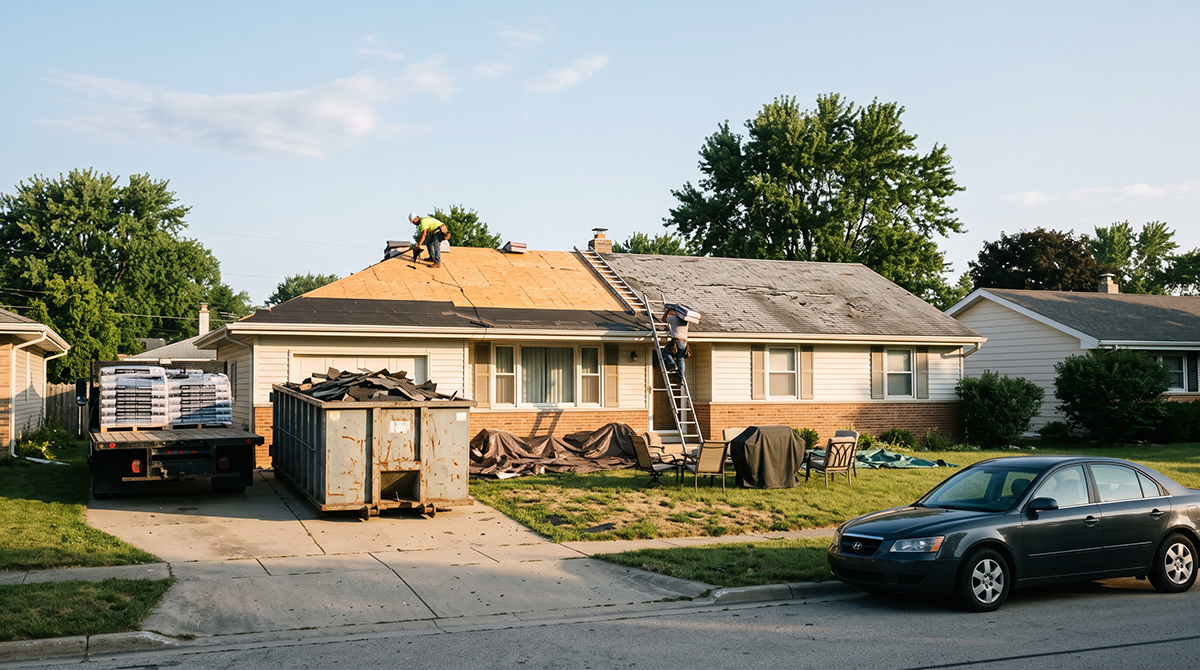
Shingles, underlayment, and a disposal container all need space, and that space is usually your driveway. Ask your roofer where each will go, which vehicles need to move, and how you’ll get in and out while work is underway. Ask whether the driveway will be protected and whether the setup leaves enough clearance around a neighbor’s property.
Don’t assume street parking is fine as a backup. Rules vary by street and municipality, so check before you plan around it. And move the car before the dumpster gets comfortable.
Then do a slow walk around the house from the ground. Look for fragile landscaping, irrigation equipment, outdoor furniture, and anything sitting beneath the roof edges. Anything you’d hate to see under falling debris is worth flagging to the crew or moving.
Confirm Access and the Best Contact Number
Think through gates, locked yards, outdoor power, and whether the crew needs any interior access at all. Many don’t, but some projects do, and the arrangement is specific to your job. Settle it ahead of time rather than on the morning of.
Also pick one person who is authorized to answer questions during the project and make sure your roofer has that person’s best number. Don’t share passwords, and don’t leave the house unsecured as a way of being accommodating. If the crew needs something, plan the handoff.
Get the Household Ready the Evening Before
Make a Plan for Kids, Pets, and Working From Home
Roofing is loud. Expect hammering or nail guns, vibration through the house, equipment noise, and debris landing around the perimeter. That can be rough on a nervous dog, a napping toddler, or anyone with a video call at 10 a.m.
If you have sensitive pets, young kids, or a work schedule that needs quiet, consider another location for the day. A relative’s house, a daycare day, or a coworking space can all work. If you’d rather stay home, ask your roofer how residents should come and go safely. Whether to stay is your call, but it depends on safe access and the specifics of your project.
Protect Belongings Without Creating Extra Hazards
Move anything portable out of the work area: patio furniture, grills, toys, planters. Cover what can’t move if your roofer agrees that’s helpful.
Inside, vibration can shake things loose. Ask whether fragile wall decorations should come down, and talk about attic belongings before work starts. If your attic has an accessible storage area, you can protect boxes there. Stay out of areas that aren’t safely reachable, and don’t disturb insulation, wiring, or ventilation while you’re at it.
Satellite dishes and solar panels are a separate matter. Removing or resetting them usually calls for qualified providers, so coordinate that with your roofer instead of treating it as a homeowner prep task.
Understand the Workday Without Expecting a Stopwatch Schedule
Delivery, Protection, Tear-Off, and Decking Inspection
In general terms, a replacement moves like this: materials arrive, the crew protects what needs protecting, the old roof comes off, and the exposed decking gets inspected. That last step matters because decking conditions can stay hidden until the old shingles are gone.
That doesn’t mean every roof turns up extra work. It means you should know the process before it happens. Ask how findings, photos, prices, and approvals will be communicated under your written agreement, and who you’ll hear from. Pricing for additional work isn’t handled the same way on every job, so get your contractor’s method in writing rather than assuming.
Installation, Weather Changes, and Daily Communication
Once the decking is sound, the new roofing system goes on. If you want the details, see Roof Panther’s residential roofing page. It currently describes most average-sized residential replacements as taking one to two days. Treat that as a typical range, not a promised completion date. Roof size, complexity, and weather all play a part.
Central Illinois weather can change a plan quickly, so ask a few questions up front:
- What happens if conditions delay the start or interrupt work?
- Who tells you, and how?
- How will unfinished areas be protected overnight or during rain?
Use This Roof Replacement Readiness Worksheet
Print this or copy it into a note, then go through it with your roofer.
| Decision | Homeowner action | Contractor confirmation | Resolved? |
|---|---|---|---|
| Vehicle exit and parking | Move needed vehicles before the agreed delivery window | Container and material locations | |
| Yard and landscaping | Move portable items, identify sensitive areas | Who protects what | |
| Children and pets | Choose a quiet location and safe exit | Restricted work areas | |
| Attic and fragile belongings | Identify accessible storage and vulnerable items | Recommended precautions | |
| Equipment on the roof | Identify solar panels or a satellite dish | Specialist coordination | |
| Unexpected decking | Keep the authorized contact reachable | Documentation and approval procedure | |
| Weather updates | Record the preferred phone number | Who announces schedule changes | |
| Completion | Collect questions and paperwork | Walkthrough and cleanup arrangements |
To see how it works, say you need your car for an afternoon appointment, your dog spends the day in the backyard, and you keep boxes in an accessible attic. Before delivery you’d write down three decisions: move the car early that morning, arrange somewhere else for the dog, and ask your roofer how to protect the boxes. Three lines, a few minutes, and most of the day’s friction is gone.
Before the Crew Leaves, Review Cleanup and Paperwork
Walk the Property Together From the Ground
Ask for a walkthrough at the end of the job. Cover debris removal, driveway access, landscaping concerns, and anything still left to do. Roof Panther’s residential page describes magnetic nail cleanup, which is a good way to pick up stray metal. A sweep like that reduces nails in your yard and driveway, but no one can promise every single nail is recovered. Know who to call if you find debris later or notice something that concerns you.
Stay on the ground for the walkthrough. Ladders and fresh roofs are for the crew.
Keep the Project Records Together
Put these in one folder, paper or digital:
- The written scope of work
- Any approved changes
- Progress photos from the contractor
- Warranty documents
- Permit or inspection records, if they apply to your project
Workmanship coverage and manufacturer coverage are not the same thing, so ask who stands behind which and for how long. Don’t rely on memory or general assumptions. For permits, the homeowner’s guide to roofing permits in Champaign County is a useful starting point.
Frequently Asked Questions
Can I stay home during roof replacement? Usually that’s up to you, but expect noise and vibration. Ask your roofer how to enter and leave safely, and make backup plans for calls or naps.
Should I move cars out of the garage? Ask. Vibration and falling debris are the concern, and some homeowners prefer to park elsewhere. Your roofer can tell you what makes sense for your setup.
What should I do with pets? Plan for somewhere quieter and safer than home, especially for dogs that bark at noise or anxious cats. Keep them away from open doors and work areas.
Can roofing work disturb attic storage? It can, through vibration or dust. Cover or relocate what’s easy to reach, and ask your roofer about precautions. Don’t crawl into areas that aren’t safely accessible.
What if damaged decking is discovered? Ask in advance how it will be documented, how you’ll be notified, and how approval and pricing work. Your written agreement should answer this.
What happens if rain changes the schedule? Delays happen. Ask who will contact you, how unfinished areas will be protected, and how the new timing will be set.
Talk Through Your Roof Replacement With Roof Panther
Every house has different quirks, whether that’s a narrow driveway, a fenced yard, or an attic full of boxes. If you’re planning a replacement and want to work out the details for your property, contact Roof Panther or call (217) 530-8570. You can also browse our roofing projects to see recent work around Central Illinois.
Roof Panther is a family-owned roofing contractor in Champaign, licensed in Illinois (#104.018415), bonded, and insured.