

Turn That Cave Into Usable Space
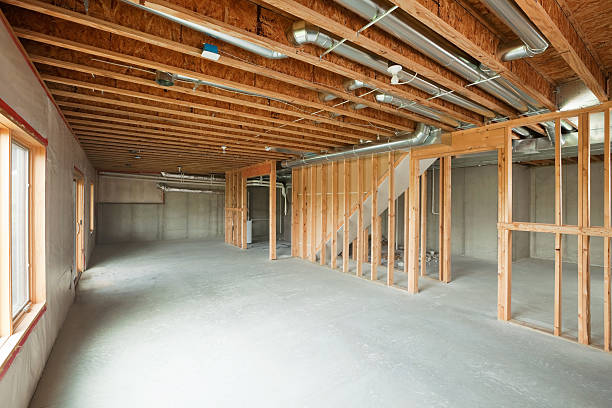
Most unfinished basements are where Christmas decorations go to die and spiders set up their retirement communities. But underneath all that concrete and those exposed pipes is something genuinely useful: square footage you already own, sitting completely idle.
Finishing a basement is one of the most cost-effective ways to add livable space to a home in Central Illinois. The foundation is already poured. The roof is already over it. You’re not expanding your footprint or dealing with property line setbacks. You’re just making better use of what’s already there.
The Financial Case for Finishing Your Basement
The numbers here are straightforward. Basement finishing in Illinois typically runs $25 to $50 per square foot for a well-executed project. Building a comparable above-ground addition runs $100 to $150 per square foot or more, because you’re paying for a new foundation, new framing, and a new roof section on top of everything else.
Finished basements in this region typically return 70 to 75 percent of the investment at resale, which is a solid return for a home improvement project. More practically, you’re adding a room or two to a house without moving, without upsizing your mortgage, and without losing the yard.
One note on permits: finishing a basement in Champaign County does require a building permit, and that’s not something to skip. We pull the permit, schedule the required inspections, and handle that process as a standard part of every project. An unpermitted finished basement can complicate your home sale and, in some cases, your insurance coverage.
Before You Finish Anything: The Moisture Question
This is the conversation most contractors skip or rush past, and it’s the one that matters most.
Finishing over a moisture problem doesn’t make the problem go away. It hides it until the drywall starts growing mold or the flooring buckles, at which point you’re tearing out finished work to fix what should have been addressed first.
Before we frame a single wall, we assess the basement for water intrusion. We look at the floor slab for staining or efflorescence, check the walls for seepage patterns, evaluate the grading around the foundation outside, and ask about the history of the space. Have you ever had water in here after heavy rain? Does it smell musty in certain weather?
In Champaign County, most basements we see are dry enough to finish without additional waterproofing intervention. But when there’s an active issue, we address it before we start. That might mean improving the exterior grading, extending downspouts further from the foundation, or in cases of more significant seepage, interior drainage solutions before finishing begins. We’ll tell you honestly what we find and what we recommend.What Ceiling Height Do You Actually Have?
This question shapes everything else about a basement project. Standard finished ceiling height is 8 feet. Most Champaign-area homes built after the mid-1970s have basements with 8 to 9 feet of clearance from floor to joists, which gives you good options.
Older homes in Champaign and Urbana, particularly those built before 1960, sometimes have basements with 7 feet or less of clearance. You can still finish these spaces, but the design approach changes. Drop ceilings work well when you need to run mechanicals through and still want to access them later. Soffits can box in ductwork and beam runs while keeping the rest of the ceiling as high as possible.
We assess ceiling height and obstacle placement during the initial consultation and design around what you actually have, not what would be ideal.
Framing and Insulation: Where Below-Grade Is Different
Basement walls look like they should be framed the same way as walls upstairs. They shouldn’t be.
Concrete foundation walls hold moisture, even in basements that appear dry. If you frame directly against the concrete, that moisture transfers into the wood, and over time you get rot, mold, and framing failure.
We frame basement walls with a gap between the stud wall and the concrete, typically an inch or two, to break that moisture pathway. Bottom plates get pressure-treated lumber, which resists moisture damage significantly better than standard framing lumber. In areas of the basement that have seen any moisture history, we use metal studs rather than wood entirely. Metal studs cost a bit more but they don’t warp, shrink, or grow mold, which makes them worth it in a below-grade environment.
Insulation in basements needs to perform differently than above-grade walls as well. Basement walls are in contact with soil, which stays around 55 degrees year-round in Central Illinois. That’s cold enough to make an uninsulated basement feel uncomfortable in winter and to create condensation problems. We use rigid foam insulation or closed-cell spray foam against the foundation wall before framing, which provides a thermal break and a moisture barrier in one step. Fiberglass batts between studs work as a secondary layer but shouldn’t be the only insulation against a concrete wall.
Electrical and Plumbing: Plan Ahead or Pay Later
Basement electrical almost always requires panel evaluation first. Most homes don’t have spare capacity for the circuits a finished basement needs, particularly if you’re adding a bathroom, a home gym with dedicated equipment circuits, or a home theater with significant AV equipment. We assess the panel early and include any necessary upgrades in the project scope rather than discovering the need mid-project.
Every junction box and shut-off valve that exists in an unfinished basement needs to remain accessible after finishing. That means planning access panels into the design now rather than drywall over those locations and deal with it later.
The plumbing tip worth repeating: if there’s any chance you’ll want a bathroom in this basement in the next ten years, rough in the drain lines now. The marginal cost of roughing in during initial construction is a few hundred dollars. Cutting open a finished concrete floor to add it later is several thousand. We ask this question at the start of every project because it’s one of the easiest ways to save a client money long-term.
Drywall and Ceilings
Basements need moisture-resistant drywall throughout, commonly called purple board or paperless drywall. Standard drywall used in above-grade rooms will absorb humidity and degrade over time in a basement environment, even a dry one. This isn’t an upgrade, it’s the baseline.
For ceilings, you have two practical options. Drywall ceilings give the cleanest finished look and the best acoustic performance, but they make accessing plumbing, electrical, and HVAC above them difficult afterward. Drop ceilings sacrifice a few inches of height and a bit of aesthetics, but they allow panel-by-panel access to everything above, which matters more than most homeowners realize until the first time a pipe needs attention. We walk through the tradeoffs for your specific situation and let you decide.
Flooring That Actually Works Below Grade
Not every flooring material belongs in a basement, and the consequences of choosing wrong can show up years later when you least expect them.
Luxury vinyl plank is the most practical choice for most basement applications. It’s fully waterproof, installs over slightly uneven slabs without issue, feels warmer underfoot than tile, and looks good. When a washing machine hose fails or a drain backs up, you clean it up and move on rather than replacing the floor. This is what we steer most clients toward.
Carpet is comfortable and acoustically nice for family rooms and bedrooms, but requires moisture-resistant padding and should only go down in basements with a clean moisture history. Carpet that gets wet doesn’t fully recover, and it holds odors permanently. We’ll give you an honest read on whether carpet is appropriate for your specific basement.
Engineered hardwood is more dimensionally stable than solid hardwood and handles moderate humidity swings reasonably well, but it isn’t waterproof. For basements with any moisture history, we don’t recommend it.
Ceramic or porcelain tile is completely impervious to moisture and extremely durable. The downsides are that it’s cold underfoot, hard on the joints if you’re standing on it for long periods, and unforgiving if a glass hits it. Good for bathrooms, laundry areas, and mudroom-style spaces. Less comfortable for living areas.
Popular Uses for Finished Basements
Most homeowners have a pretty clear idea of what they want from their basement before they call us. Here are the most common ones we build in this area:
Family Room and Entertainment Space
The classic basement use and still the most popular. A large screen setup with comfortable seating, a game area, and a simple wet bar or snack station. Durable flooring, good lighting, and decent soundproofing from the floor above. This is a space that gets used constantly once it’s finished.
Home Office
Remote work has made basement offices genuinely popular. The natural sound insulation from being below grade is a real advantage for video calls. Key considerations are enough electrical circuits for equipment, good lighting (window wells and recessed fixtures work well together), and a layout that separates work from the rest of the basement if other family members are using the space.
Guest Suite
A proper guest suite requires a legal egress window in any sleeping room, which is a code requirement in Illinois and a genuine safety issue. We install egress windows as part of this scope since most basement windows don’t meet the minimum opening size for egress. A three-quarter bath (shower, no tub) keeps the footprint reasonable while making the space genuinely independent and comfortable.
Home Gym
Basement gyms
are practical in ways that above-grade rooms often aren’t. The concrete slab handles heavy equipment without floor reinforcement concerns. Sound isolation contains the noise of early morning workouts. The main considerations are adequate ventilation (basements get warm with equipment and bodies in them), good lighting, and rubber flooring or interlocking gym tiles over the slab.
Kids' Space or Teen Hangout
Getting the toys, the gaming setup, and the general noise of kids downstairs is something parents consistently report as one of the best decisions they made. The space needs to be durable, easy to clean, and have enough sound isolation that it doesn’t turn the living room above into a concert hall.
Egress Windows: What You Need to Know
Any room used as a sleeping space in a finished basement requires a code-compliant egress window in Illinois. This isn’t optional and it isn’t negotiable with inspectors. The window opening needs to meet minimum dimensions for emergency exit, and the window well outside needs to be large enough to climb out of.
We install egress windows as part of our basement finishing work. This involves cutting through the foundation wall, which requires the right equipment and needs to be done correctly to avoid compromising the structural integrity of the wall. Homeowners who hire general contractors without this capability often end up subcontracting this piece to someone else mid-project. We handle it in-house.
How This Compares to a Home Addition
If you’re weighing a basement finish against a home addition, the cost difference is the main factor. Basement finishing at $25 to $50 per square foot versus an addition at $100 to $150 per square foot is a significant gap.
The tradeoffs are natural light, ceiling height, and the feel of the space. A finished basement is genuinely comfortable and functional, but it doesn’t have the same natural light as an above-grade addition. If what you need is a home office, a gym, an entertainment room, or guest accommodations, a basement finish delivers that at substantially lower cost. If what you need is a bright sunlit family room or a bedroom addition that feels like the rest of the house, an addition is probably the right answer.
We build both and don’t have a stake in pushing you one direction. We’ll help you think through which makes more sense for your specific situation.
Ready to Get Started?
We work on basements throughout Champaign, Urbana, Savoy, Mahomet, Rantoul, and the surrounding communities. If you have an unfinished basement and you’re ready to stop walking past it, contact Roof Panther for a free in-person consultation. We’ll take a look at what you have, talk through what’s realistic, and give you a straight answer on scope and cost.
Our Credentials

Licensed
In Illinois (#104.018415) and growing

Bonded
For your peace of mind

Insured
With high limits

Guaranteed
With a workmanship warranty
Contact Us! (Please provide your contact information below.)
We Look Forward To Working With You!
Roof Panther
903 N High Cross Rd. Urbana, IL 61802
By Appointment Only
Phone
(217) 530-8570
roofpanther@gmail.com