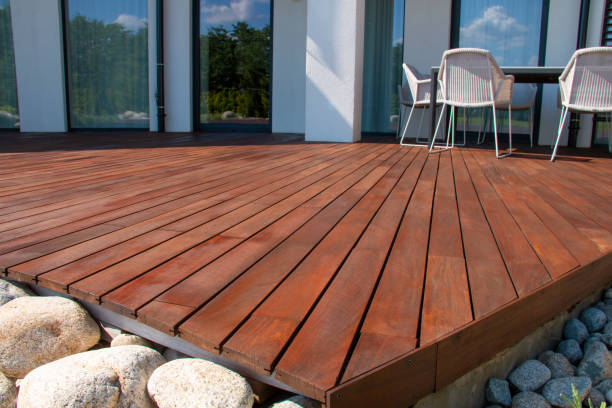

The Outdoor Space You'll Actually Use
A well-built patio does something most home improvements can’t claim: it changes how you live in your house. That patch of grass behind the back door that gets mowed and ignored becomes the place where you have coffee in the morning, where the kids eat dinner in summer, where friends end up staying later than anyone planned.
I’ve built patios all across Champaign County, from simple concrete slabs behind ranch homes in Savoy to multi-level paver designs with built-in seating walls and fire features in newer Mahomet neighborhoods. The size and budget vary a lot. What stays consistent is that a well-designed patio gets used constantly, and a poorly designed one doesn’t get used much at all, regardless of how nice the materials are.
Why a Patio Makes Financial Sense
Patios return roughly 80 percent of their cost at resale, which puts them among the stronger outdoor home improvement investments. They also cost 30 to 40 percent less than a comparable deck for the same square footage, because you’re working at grade rather than building an elevated structure with posts, beams, and decking.
A quality patio built on a proper base lasts 25 years or more with minimal maintenance. Concrete doesn’t rot. Pavers don’t splinter. Neither requires annual sealing or staining the way a wood deck does. For Central Illinois, where summers are hot and winters involve real freeze-thaw cycles, low-maintenance durability matters more than it might in a milder climate.
There’s also a practical drainage benefit that doesn’t come up in most conversations about patios but should: a properly graded patio with correct drainage can solve persistent mud and water pooling problems in high-traffic areas around back doors and garage entrances. It’s not glamorous, but it’s genuinely useful.
Patio Materials: What We Build With
This is the question the original page on this site never answered, and it’s the first thing most homeowners want to know. Here’s a straightforward breakdown of the materials we work with most often in this area.
Concrete
Poured concrete is the most affordable patio surface and, done correctly, one of the most durable. A properly installed concrete patio on a well-compacted base with the right mix design and control joint placement will hold up through Central Illinois winters without significant cracking for decades.
The knock on plain concrete is that it’s visually flat. Stamped concrete addresses that directly. Stamping adds texture and pattern to the surface while the concrete is still workable, creating the appearance of pavers, flagstone, slate, or brick at a lower cost than the real materials. Integral color or surface-applied stain adds further visual interest. Stamped concrete costs more than plain concrete but less than a comparable paver installation, and it’s a popular middle ground for Champaign-area homeowners who want aesthetics without the paver price.
One honest note on stamped concrete: it requires sealing every few years to maintain the color and protect the surface. That’s a manageable maintenance task, but it’s worth knowing upfront.
Concrete Pavers
Interlocking concrete pavers are the most versatile patio surface we install. They come in a wide range of sizes, shapes, colors, and textures. They can be laid in straight patterns, herringbone, running bond, or more complex designs. They look more refined than poured concrete and hold up well in freeze-thaw conditions because the joints between individual units allow for minor movement without cracking.
The practical advantage of pavers that doesn’t get mentioned enough: if a section settles or a utility line needs access underneath, individual pavers can be lifted, the issue addressed, and the pavers reset. With a poured slab, any repair involves cutting concrete. With pavers, the surface is essentially reusable.
Pavers cost more than poured concrete upfront, but the long-term maintenance and repairability picture is favorable.
Natural Stone
Bluestone, limestone, and flagstone all show up in higher-end patio projects in this area. Natural stone has a character and variation that manufactured materials can approximate but not fully replicate. It’s at the upper end of the cost range and requires thoughtful installation, particularly in Illinois where frost heave can affect irregularly shaped pieces more than uniform pavers, but the finished result is genuinely distinctive.
We work with natural stone on projects where the aesthetic is a priority and the budget supports it. We’ll give you an honest read on whether it’s the right choice for your specific situation.
Brick Pavers
Traditional clay brick pavers have a warmth and classic look that works particularly well with older Champaign and Urbana homes. They’re durable, age gracefully, and hold color better over time than some concrete paver options. The tradeoff is a somewhat higher cost than concrete pavers and a more limited range of pattern options given their uniform rectangular shape.
Illinois Winters and Your Patio: What Actually Matters for Longevity
A patio that looks great in May and starts cracking by November is a base problem, not a material problem. This is the most important technical point on this page, and it’s the thing that separates installations that last from ones that don’t.
Central Illinois has a freeze-thaw climate. Water gets into soil, freezes, expands, and moves things. A patio base that isn’t properly compacted, properly graded for drainage, and built to the right depth for our frost conditions will heave, settle unevenly, and crack, regardless of whether the surface is poured concrete, pavers, or natural stone.
The base for any patio we install starts with excavation to remove topsoil and organic material, which compresses and decompresses with moisture. We bring in compactable gravel base material, typically a 4 to 6 inch layer for standard patios, and compact it in lifts rather than all at once. Compaction in lifts is slower, but it produces a genuinely stable base rather than a surface-level approximation of one. For poured concrete, we add a layer of sand or compacted stone screenings as a setting bed. For pavers, a sand or stone dust setting layer goes on top of the compacted gravel.
Drainage is addressed as part of the base work, not as an afterthought. The patio surface needs to slope slightly away from the house, typically a quarter inch per foot, so water moves off the surface rather than sitting on it or running toward the foundation. Control joints in concrete patios are placed deliberately to guide any future cracking to predictable locations rather than letting it propagate randomly across the slab.
These are the invisible parts of the job. They’re what a homeowner never sees and rarely thinks about, and they’re exactly what determines whether a patio looks the same in ten years as it did on installation day.
Sizing Your Patio Correctly
Undersized patios are one of the most common mistakes we see, and one of the most expensive to fix after the fact since expanding a patio means tearing up landscaping, resetting edges, and matching existing materials. It’s worth sizing correctly the first time.
Practical minimums for common uses:
Dining area
12 by 12 feet accommodates a table for four with enough room to pull chairs out without stepping off the edge. If you regularly host six or eight people, plan for 14 by 16 feet or larger.
Conversation seating
10 by 10 feet works for a small group. A comfortable outdoor living room arrangement with a sofa, two chairs, and a coffee table needs closer to 12 by 16 feet.
Grill zone
Allow at least 3 feet of clearance around the grill on all sides. If the grill is part of a larger outdoor kitchen setup, factor in counter space and traffic flow around whoever is cooking.
Combined uses
A patio that handles dining, conversation, and a grill comfortably typically needs to be at least 16 by 20 feet. Most homeowners who go smaller end up feeling cramped by the second summer.
When we assess your space, we account for the transition from the back door, any grade changes, and existing landscaping that affects the usable footprint. Sometimes the right answer is a slightly different shape or orientation than the homeowner originally pictured.
Design Considerations Worth Thinking About Early
A few design decisions that are cheap to make at the planning stage and expensive to change afterward:
Lighting
Conduit run under the patio slab or through the base before installation costs almost nothing. Adding low-voltage lighting or an outdoor outlet to an existing finished patio means jackhammering or trenching around the edges. If you think you might ever want patio lighting, plan for it now.
Gas line
Same logic applies to a natural gas line for a grill or fire feature. Running a line during construction is a straightforward rough-in. Adding it to a finished patio is a significant excavation project.
Seating walls
Integrated masonry seating walls define the patio edge, add seating capacity without furniture, and give the space a finished architectural look. They're most cost-effective when designed and built as part of the original installation.
Shade structure connections
If there's any chance you'll want a pergola or overhead structure over the patio, the post footings for that structure can be set during patio construction. This is far less disruptive than adding them to a finished patio surface later.
Patios vs. Decks: How to Choose
The question comes up often enough that it’s worth addressing directly. A deck is the right answer when the back of your house sits elevated off the ground and you need to match that level, when you want a wood or composite surface aesthetic, or when you prefer the look and feel of a raised platform. A patio is generally the better choice when the yard is at or near grade behind the house, when budget is a significant factor, when you want a low-maintenance surface, or when you’re dealing with a drainage or mud problem that the patio itself can help address.
Some outdoor spaces work best with both: a deck off the back door that transitions down to a patio at grade level, with steps connecting the two. This is a natural approach for homes with some elevation change at the rear, and it gives you distinct zones for different uses.
Ready to Get Started?
Our Credentials

Licensed
In Illinois (#104.018415) and growing

Bonded
For your peace of mind

Insured
With high limits

Guaranteed
With a workmanship warranty
Contact Us! (Please provide your contact information below.)
We Look Forward To Working With You!
Roof Panther
903 N High Cross Rd. Urbana, IL 61802
By Appointment Only
Phone
(217) 530-8570
roofpanther@gmail.com