

Look, nobody wants to be the homeowner who ignores their roof until water starts dripping into their living room during Sunday dinner. Trust me, I’ve seen it happen more times than I care to count, and it’s never pretty. The good news? You don’t need to channel your inner Spider-Man and climb up there to spot most roof problems. Your feet can stay firmly planted on the ground while you play detective with your roof’s health.
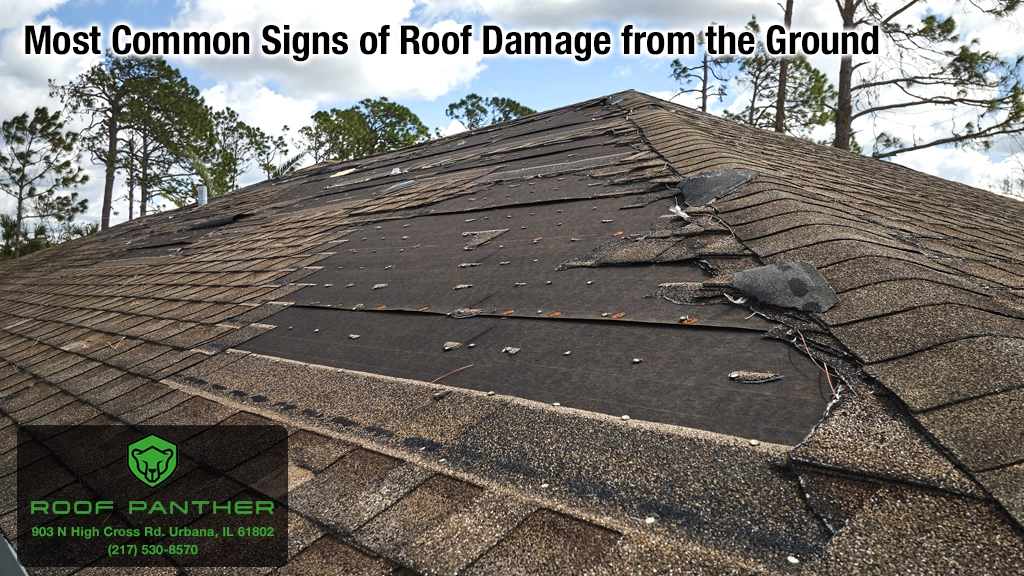
Missing, Damaged, or Curling Shingles
The most obvious red flag you’ll spot from ground level is when shingles start looking like they’ve been through a blender. After a good storm rolls through Illinois, take a walk around your property and check for shingles scattered across your lawn like confetti after a really bad party.
Grab some binoculars and examine your roof for gaps where shingles have gone AWOL. You’ll also want to look for:
- Curling or cupping shingles – These guys have lost their flexibility, usually from age or poor ventilation
- Cracked shingles – These expose your waterproof underlayment to Mother Nature’s mood swings
- Bald spots – Areas where the color looks different because protective granules have worn away, leaving that black asphalt underneath exposed
When shingles start curling up like potato chips, they’re basically waving a white flag. Time to start planning that roof replacement before things get ugly.
Granule Loss in Gutters and Downspouts
Here’s something most homeowners don’t think about: those tiny, sand-like particles you find in your gutters are actually telling you a story about your roof’s health. These granules are the protective coating on asphalt shingles that shield your roof from UV rays and harsh weather.
Sure, some granule loss is normal over time, shingles aren’t immortal. But when you start finding what looks like a sandbox worth of granules in your gutters, that’s your roof crying for help. Check around your downspouts, especially on splash blocks where these granules are easier to spot.
After storms, if you see dark granules scattered on the ground like someone spilled a bag of coarse sand, your shingles might be approaching retirement age. This is particularly common with roofs that are 15-20 years old.
Sagging Rooflines
This one’s serious, folks. Step back from your house and take a good look at whether your roofline appears straight and level. If your roof looks like it’s doing the wave or has developed some unwanted curves, you’ve got a problem that needs immediate attention.
A sagging roofline can indicate:
- Damaged rafters
- Water-weakened decking
- Foundation settlement issues
- Structural problems that could lead to catastrophic failure
I’ve seen roofs that looked fine from up close but showed obvious sagging when viewed from across the street. Don’t ignore this one, it’s not going to fix itself, and waiting will only make things more expensive.
Debris and Storm Damage Evidence
After any significant weather event, channel your inner CSI investigator and look for evidence. Tree limbs on your roof are obvious problems, but also check for:
- Dents on gutters and downspouts
- Damage to garage doors
- Holes in window screens
- Dings on your AC unit or mailbox
If hail was strong enough to dent your gutters, you can bet your roof took a beating too. Sometimes the damage isn’t immediately obvious, but those dented gutters are like a canary in a coal mine.
Dark Streaks and Stains
Those dark streaks running down your roof aren’t just cosmetic issues, they’re telling you something important. In our humid Illinois climate, you’ll often see black or dark green streaks that indicate algae growth or moisture buildup.
While algae won’t directly damage asphalt shingles, it can mess with the effectiveness of reflective roofing systems. Moss is a bigger concern because it:
- Causes shingle edges to lift and curl
- Increases risk of wind damage
- Holds moisture against the roof surface
- Can lead to decay beneath the shingles
Think of moss as that houseguest who overstays their welcome and starts causing problems.
Gutter and Drainage Issues
Your gutters are like the unsung heroes of your roofing system, and they can tell you a lot about what’s happening up top. Look for:
- Gutters pulling away from the house
- Sagging sections
- Rust and corrosion
- Clogs filled with debris
Clogged gutters are particularly problematic because they cause water to back up onto your roof. In winter, this can lead to ice dams, and trust me, those are about as fun as they sound.
Make sure your downspouts are directing water at least 5 feet away from your foundation. Poor drainage around your home’s base can cause foundation problems that eventually affect your roof structure. It’s all connected, like a really expensive domino effect.
Damaged Flashing and Roof Penetrations
From ground level or a second-story window, examine the metal flashing around chimneys, vents, and skylights. Look for:
- Rust or corrosion
- Gaps or cracks
- Loose or missing sections
- Damaged or missing chimney caps
Any area where your roof meets a wall, chimney, or other structure is vulnerable to leaks. These spots are like the weak links in your roof’s armor, and deteriorating caulking or exposed nails around these areas are red flags.
Interior Warning Signs
Don’t forget to play detective inside your home too. Water stains on ceilings or walls, especially after heavy rain, are often the first signs homeowners notice. Other interior clues include:
- Peeling paint or bubbling wallpaper
- Musty odors in upper floors or attic spaces
- Discoloration around light fixtures
- Warped or stained ceiling tiles
These interior signs often show up before exterior damage becomes obvious, so don’t ignore them.
Using Binoculars for Better Inspection
Binoculars are your best friend for ground-level roof inspections. They let you safely examine your roof’s condition in detail without risking life and limb on a ladder. Use them to check for:
- Loose or damaged shingles
- Problems with flashing
- Moss or algae buildup
- General wear patterns
Take photos with your phone’s zoom feature to document any issues you find. This visual record helps when you’re talking to roofing contractors and lets you track changes over time.
Safety Always Comes First
Look, I get it, some homeowners think they need to climb up there and poke around. Don’t do it unless you’re trained and properly equipped. Most roof damage can be effectively assessed from ground level, and professional roofers have the expertise and safety equipment to conduct thorough inspections when needed.
I’ve seen too many weekend warriors end up in the emergency room because they thought they could handle a quick roof check. Your insurance company and your family will thank you for keeping your feet on the ground.
Don’t Wait Until It’s Too Late
Regular ground-level inspections, especially after severe weather events, can save you thousands of dollars by catching problems early. Your roof is one of your home’s most important systems, and a little attention goes a long way.
If you notice any of these warning signs, don’t wait until next season or hope the problem will resolve itself. Contact a qualified roofing professional for a comprehensive assessment. At Roof Panther, we’ve seen what happens when small problems become big emergencies, and trust me, it’s always cheaper to address issues sooner rather than later.
Remember, your roof works hard to protect everything you care about inside your home. The least you can do is keep an eye on it from the ground and give it the attention it deserves when warning signs appear.


