

As those beautiful autumn colors start painting Illinois landscapes, it’s time to shift gears and focus on one of your home’s most important protectors: your roof. Trust me, I’ve seen what happens when homeowners skip fall maintenance, and it’s not pretty. Winter in the Midwest doesn’t mess around, and neither should you when it comes to preparing your roof for what’s coming.
At Roof Panther, we’ve weathered every type of Illinois storm you can imagine, and I can tell you that the homeowners who take fall maintenance seriously are the ones sleeping peacefully when the snow starts flying. Let me walk you through exactly what you need to do to get your roof winter-ready.
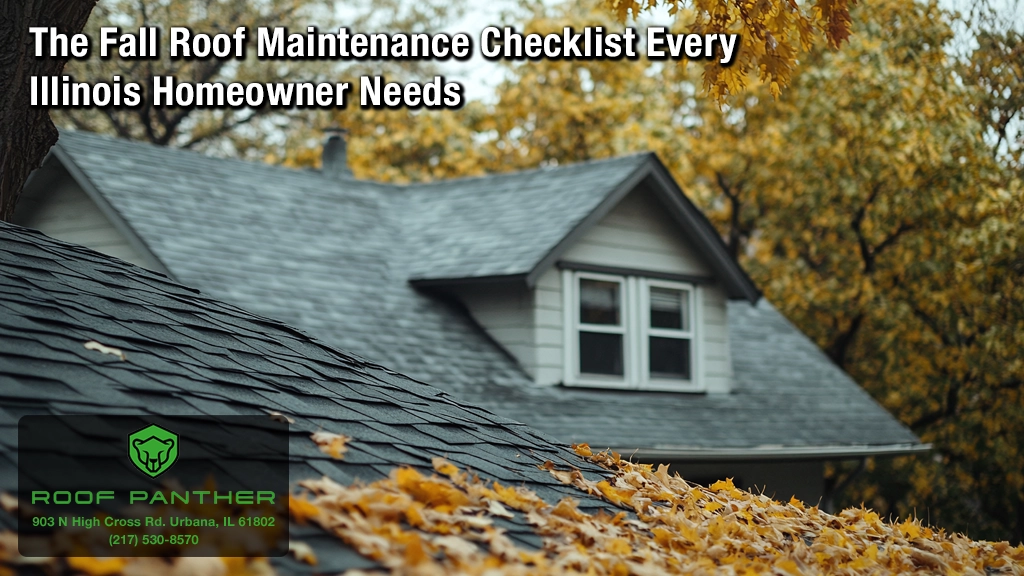
Why Fall Maintenance is Make-or-Break in Illinois
The Perfect Storm of Challenges
Illinois weather is like that friend who can’t make up their mind. One day it’s 70 degrees and sunny, the next you’re dealing with 60 mph winds and hail. This unpredictability puts serious stress on your roof and can turn minor issues into major headaches fast.
Just this past August 2025, we saw storms rip through the Chicago area with wind gusts hitting 60 mph. These storms literally tore the roof off an apartment building in Mount Prospect and left over 68,200 ComEd customers in the dark. That’s the kind of weather we’re dealing with here, and it shows why being proactive isn’t optional.
Why Fall is Your Sweet Spot
Fall gives you the perfect window for roof maintenance:
- Temperatures are comfortable enough to work safely
- You can catch and fix summer storm damage before winter makes it worse
- It’s your last chance to clear debris before leaves really start falling
- You can prevent small problems from becoming expensive winter emergencies
Your Essential Fall Roof Maintenance Checklist
1. Clean Those Gutters Like Your House Depends on It (Because It Does)
This isn’t just busy work. Throughout spring and summer, your gutters collect leaves, twigs, shingle granules, and all sorts of debris. When autumn leaves join the party, you’ve got a recipe for disaster.
Here’s why this matters so much in Illinois: Clogged gutters can’t handle rainwater and melting snow. When water has nowhere to go, it creates ice dams, which are basically winter’s way of saying “surprise, here’s some interior water damage for you.”
What you need to do:
- Get a sturdy ladder with safety stabilizers
- Wear heavy-duty gloves (trust me on this one)
- Scoop out all debris with a garden trowel or gutter scoop
- Flush gutters with your garden hose to check water flow
- Make sure downspouts aren’t blocked
- Consider gutter guards for next year (your future self will thank you)
2. Give Your Roof a Thorough Once-Over
Time to play detective and look for trouble spots. Here’s what to keep an eye out for:
Shingle Problems:
- Missing, cracked, or curling shingles
- Granule loss that creates “bald spots”
- Shingles with edges curling up or cupping
Structural Red Flags:
- Dips or sags in the roofline
- Areas where the roof looks unstable or damaged
Flashing and Sealant Issues:
- Damaged or loose flashing around chimneys, vents, and skylights
- Cracked or missing caulk
- Sealants that are deteriorating
Pro tip: While you can spot obvious problems, professional inspections in Illinois typically run $100-$300 and can catch hidden issues that might slip past you. Given our harsh weather, it’s often worth the investment.
3. Check Inside for Warning Signs
Don’t forget to look inside your house for clues about roof problems:
- Water stains on ceilings or walls
- Mold, mildew, or musty odors
- Signs of moisture or dampness
- Peeling paint or bubbling plaster
These interior signs often point to roof problems that need immediate attention before winter weather makes them worse.
4. Clear Debris Like a Pro
Fall debris management is crucial for preventing multiple problems down the road.
Safety first:
- Use a roof rake or long-handled tools to stay off the roof when possible
- Never work alone – have someone spot you
- Make sure your ladder is stable and use proper safety equipment
Clearing techniques:
- Start from the ridge (top) and work your way down
- Use a leaf blower angled downward to avoid lifting shingles
- Remove branches, leaves, and anything else that can trap moisture
- Pay extra attention to valleys where debris loves to collect
5. Trim Those Overhanging Branches
This is one of those “ounce of prevention” situations. Trimming overhanging branches:
- Reduces the amount of debris landing on your roof
- Prevents branches from breaking under snow and ice weight and damaging your roof
- Eliminates highways for critters looking for winter shelter
My recommendation: Keep branches at least 6-10 feet from your roofline. When storms hit, you’ll be glad you did.
6. Deal with Moss and Algae Growth
Illinois’s fall weather creates perfect conditions for moss and algae to party on your roof. These uninvited guests can:
- Trap moisture against roof surfaces
- Speed up wear and lead to leaks
- Signal underlying moisture or ventilation problems
If you spot moss or algae, use roof-specific moss killers or call in professionals for a thorough cleaning.
7. Check Your Attic Ventilation and Insulation
This step is huge for preventing ice dams, which are one of Illinois homeowners’ biggest winter nightmares:
- Proper insulation keeps heat where it belongs (in your living spaces)
- Good ventilation prevents moisture buildup
- Together, they prevent the uneven roof temperatures that create ice dams
Warning sign to watch for: If you see icicles forming on your house, that’s your roof telling you there’s a problem that needs immediate attention.
Illinois-Specific Weather Challenges
Ice Dam Prevention is Critical
Ice dams are like winter bullies that pick on Illinois homes. Here’s how they form:
- Snow piles up on your roof
- Heat escapes from poorly insulated attics, melting snow on upper roof sections
- That melted water refreezes at the colder eaves, creating an ice barrier
- More snowmelt backs up behind this barrier and can sneak under your shingles
Prevention strategies:
- Keep gutters clean for proper drainage
- Make sure you have adequate attic insulation (paper-faced insulation should face down)
- Consider self-regulating heating cables for gutters and roof drains
- Remove heavy snow accumulation from your roof
Wind and Storm Damage Prep
Illinois weather can change faster than a teenager’s mood. Our unpredictable patterns, including sudden microbursts and severe thunderstorms, mean you need to pay special attention to:
- Securing loose shingles before they become projectiles
- Checking for hail damage that might not be obvious at first glance
- Making sure all roof components can handle sudden weather changes
When to Call in the Professionals
Safety Should Always Come First
DIY roof maintenance has real risks that Illinois homeowners need to consider:
- Fall hazards from steep, wet, or unstable surfaces
- Weather-related dangers from sudden storms
- Risk of causing more damage if you don’t know proper techniques
You Need Professional Help When You See:
- Multiple damaged or missing shingles
- Signs of structural damage or sagging
- Evidence of water getting inside
- Complex flashing repairs around chimneys or vents
- Any situation that makes you feel unsafe or uncertain
Professional advantages:
- Licensed, bonded, and insured contractors provide protection and expertise
- Access to specialized equipment and safety gear
- Ability to spot hidden problems that could become major issues
- Warranty coverage on work performed
Emergency Situations
Call for immediate professional help if you have:
- Active leaks during storms
- Sagging roof sections
- Missing large sections of shingles
- Damage from fallen trees or branches
Many roofing companies in Illinois offer emergency services and can tarp your roof to protect it until permanent repairs can be made.
Getting Ready for Illinois Winter
Final Pre-Winter Steps
As you wrap up your fall maintenance checklist:
Document everything: Take photos of your roof’s condition for insurance purposes. Trust me, you’ll be glad you did if you need to file a claim later.
Plan for snow removal: Figure out safe methods and get the right equipment for removing heavy snow buildup. A roof rake is your friend here.
Keep emergency contacts handy: Have professional roofing contractor information where you can find it easily, even during a storm.
Stock emergency materials: Consider keeping basic supplies on hand like roof tape and tarps for temporary fixes until professionals can get there.
Long-Term Planning
Think beyond this winter:
- Schedule annual professional inspections
- Plan gutter guard installation for next year
- Evaluate whether your current roof can handle another Illinois winter or needs replacement
- Consider upgrading insulation or ventilation if you’re having recurring issues
The Bottom Line
Fall roof maintenance isn’t just a suggestion for Illinois homeowners, it’s essential protection against what our Midwest winters dish out. I’ve seen too many homeowners learn this lesson the hard way, dealing with emergency repairs in freezing temperatures or, worse yet, interior damage from preventable leaks.
By following this checklist, you’re not just maintaining your roof; you’re protecting your family, your belongings, and your investment. Every step you take now could save you hundreds or thousands of dollars later.
At Roof Panther, we’ve been helping Illinois homeowners through every type of weather challenge our state can throw at us. As a second-generation, family-owned roofer serving Champaign County and surrounding areas, we understand that your roof is more than just shingles and nails, it’s what keeps your family safe and comfortable.
Whether you tackle this checklist yourself or need professional help with any part of it, the important thing is getting it done before that first snowfall. Don’t wait until you’re dealing with an emergency to discover problems with your roof.
Start your fall maintenance today. Check what you can safely handle yourself, and don’t hesitate to call in professionals when safety or expertise concerns arise. Your future self will thank you when you’re warm and dry inside while Illinois winter does its worst outside.
Remember: A well-maintained roof is your home’s first line of defense against whatever Mother Nature decides to throw your way. Make fall maintenance a priority, and enjoy the peace of mind that comes with knowing your home is ready for anything Illinois weather can dish out.
Because when winter hits hard, and it will, you want to be the homeowner who’s prepared, not the one scrambling to find a roofer in a snowstorm.
Don’t let autumn’s golden display turn into a costly nightmare. Contact Roof Panther today at (217) 530-8570 to schedule your fall roof inspection. We’ll make sure your home is protected throughout the season and beyond, so you can enjoy those beautiful fall colors without worrying about what’s happening on your roof.


