

As autumn rolls into Champaign County, those gorgeous fall colors we all love start painting our neighborhoods in brilliant reds, oranges, and yellows. Trust me, after spending countless seasons up on roofs around here, I can tell you that while Illinois’ 250+ tree species create one heck of a beautiful show, those falling leaves can turn into a real headache for your roof if you’re not careful.
I’ve seen too many homeowners get caught off guard by what seems like harmless autumn debris, only to face thousands of dollars in damage later. Let’s talk about what’s really happening up there when those leaves start piling up.
The Silent Threat: How Leaves Actually Damage Your Roof
Moisture Retention Creates a Perfect Storm
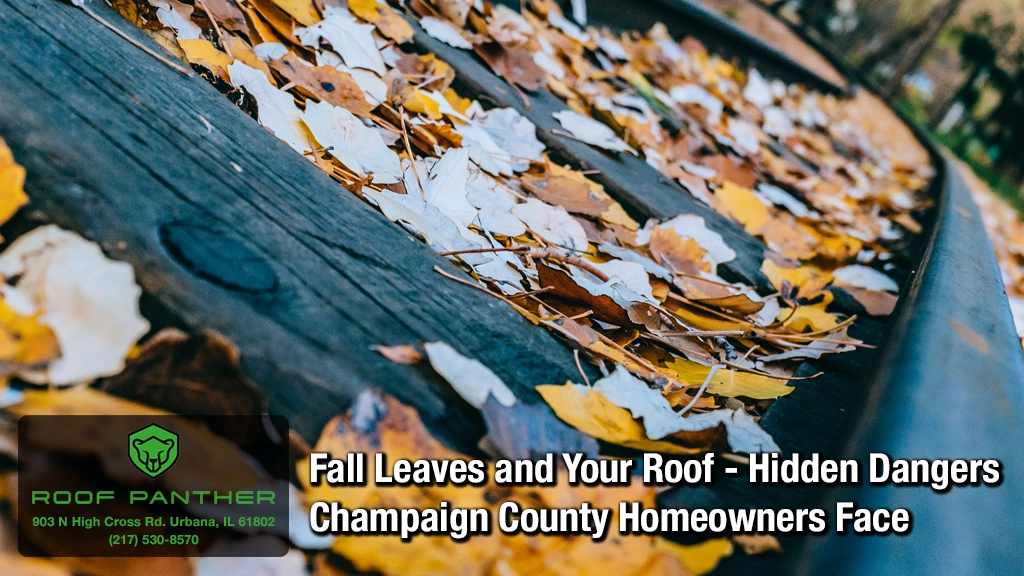
Here’s something most folks don’t realize, those innocent-looking leaves are basically moisture magnets. When they pile up on your roof and get waterlogged, they create this constantly damp environment that’s like a five-star resort for mold, mildew, and moss.
I’ve pulled back layers of soggy leaves to find shingles that looked like they’d been sitting in a swamp for months. That prolonged moisture exposure weakens your roofing materials and can lead to roof rot, especially if you’ve got wooden decking underneath those shingles.
In Illinois, where we get those frequent autumn rains and temperature swings that make you question if Mother Nature knows what season it is, wet leaves plastered against your shingles can deteriorate the protective granules on asphalt shingles faster than you’d think. Once those granules start going, your roof becomes about as protective as a screen door in a hurricane.
The Weight Game Nobody Talks About
Here’s something that surprises most homeowners, wet leaves get heavy. Really heavy. I’ve seen thick layers of waterlogged leaves add serious weight to roof structures, and when you combine that with our typical autumn downpours, you’re looking at stress your roof wasn’t designed to handle long-term.
That extra burden can cause sagging, and in extreme cases I’ve worked on, actual structural damage. Your roof is built tough, but it’s not built to be a swimming pool for decomposing leaves.
Unwanted Guests Love Leaf Hotels
That damp, organic-rich environment created by leaf buildup becomes prime real estate for insects. Mosquitoes, termites, and other pests love setting up shop in these conditions. Once they’re comfortable on your roof, it’s only a matter of time before they start exploring the rest of your property, including your home.
Gutter Catastrophes: When Leaves Turn Your Drainage Into a Dam
The Overflow Nightmare
Living in Champaign County means we’re blessed with some serious tree coverage, just take a drive through Clark Park or down those tree-lined streets in Urbana. But all that natural beauty comes with a price during leaf season. When leaves and twigs pack your gutters tighter than sardines in a can, water has nowhere to go but over the sides.
I’ve responded to emergency calls where clogged gutters caused:
- Foundation damage from water pooling around the home’s base
- Basement flooding when overflow saturated the soil around foundations
- Roof leaks from water backing up under shingles
- Ice dam formation that turned into major problems once winter hit
The Real Cost of Ignoring the Problem
Professional restoration companies around Illinois consistently report that clogged gutters rank among the top causes of water infiltration. The damage I’ve seen includes rotted fascia boards, compromised siding, and structural issues that required major repairs. We’re talking repair bills that can easily hit the thousands.
Illinois-Specific Challenges We Deal With Every Fall
Timing Is Everything
According to the National Weather Service, Central Illinois typically sees peak fall colors from mid-October into early November. That’s a pretty narrow window where most of the leaf drop happens, which means you can go from “everything looks fine” to “where did all these leaves come from” in about two weeks.
Know Your Local Troublemakers
After working on roofs all around the world, I’ve learned which trees cause the biggest headaches:
Red Oak and Sugar Maple produce those big, heavy leaves that can clog gutters faster than you can say “fall cleanup.” These beauties are gorgeous but they don’t mess around when it comes to leaf volume.
Sweet Gum and Tulip Trees drop substantial amounts of debris that loves to mat together when wet. I’ve pulled clumps of these leaves out of gutters that were packed so tight they formed their own little dams.
Cottonwood and Ash create fine debris that’s sneaky, it can slip through gutter guards and accumulate in downspouts where you can’t see it building up until water starts backing up.
Prevention Strategies That Actually Work
Stay on Top of Gutter Maintenance
The most important thing you can do is keep those gutters clean throughout fall. In the heavily wooded areas around Champaign County, I recommend cleaning gutters at least twice during peak leaf fall, once in early October and again in late October or early November.
I know it’s not the most exciting weekend activity, but trust me, it beats dealing with water damage later. If you’re not comfortable getting up there yourself (and honestly, I don’t blame you), it’s worth hiring professionals who have the right equipment and know-how to do it safely.
Get a Professional Roof Inspection Before Leaf Season
This is something I always tell homeowners, schedule a roof inspection before the leaves start falling. At Roof Panther, we can spot vulnerable areas and make sure your roof is ready for autumn’s challenges.
Catching loose shingles or compromised flashing early means we can fix small problems before they become big, expensive problems when combined with leaf debris and moisture. It’s like getting a physical before flu season, prevention is always cheaper than treatment.
Smart Tree Management Pays Off
Consider having overhanging branches professionally trimmed. This isn’t about cutting down your beautiful trees, it’s about strategic pruning that reduces the volume of leaves landing directly on your roof. Plus, removing those overhanging branches eliminates the risk of branch damage during fall storms, which we see plenty of around here.
Gutter Guards: Worth the Investment
Quality gutter protection systems can be game-changers for reducing fall maintenance headaches. Modern gutter guards let water flow through while blocking most leaves and debris. Just remember, they’re not magic. You’ll still need periodic inspection and cleaning, but the workload drops significantly.
When to Call in the Professionals
Safety Should Always Come First
Look, I get it, there’s something satisfying about tackling home maintenance yourself. But roof work during wet fall conditions is genuinely dangerous. We have the proper equipment, safety gear, and experience to handle debris removal and inspections without anyone ending up in the emergency room.
The cost of professional cleaning is nothing compared to medical bills or the potential expense of roof damage from a well-intentioned but risky DIY attempt.
We Catch What You Might Miss
Professional roofers can identify issues that even the most observant homeowners might overlook:
- Early signs of shingle deterioration that aren’t obvious from ground level
- Compromised flashing around chimneys and vents
- Adequate attic ventilation to prevent moisture buildup
- Structural concerns from repeated leaf accumulation over the seasons
The Reality for Champaign County Homeowners
Fall’s beauty in Champaign County comes with real responsibility. Those same mature trees that make our neighborhoods so desirable also require proactive roof maintenance. I’ve seen too many homeowners learn this lesson the hard way.
The good news is that understanding these hidden dangers and taking preventive action can protect your home investment and save you from costly emergency repairs down the road. Regular maintenance, professional inspections, and prompt debris removal are your best weapons against the problems lurking in those beautiful fall leaves.
Don’t Wait Until It’s Too Late
Every fall, I get emergency calls from homeowners who thought they could wait until spring to deal with leaf cleanup. By then, the damage is often already done, and it’s always more expensive to fix than it would have been to prevent.
At Roof Panther, we’ve been helping Champaign County homeowners protect their investments through every season. We understand the specific challenges our local climate and tree species create, and we know how to address them before they become major problems.
Don’t let autumn’s golden display turn into a costly nightmare. Contact Roof Panther today at (217) 530-8570 to schedule your fall roof inspection. We’ll make sure your home is protected throughout the season and beyond, so you can enjoy those beautiful fall colors without worrying about what’s happening on your roof.
Because at the end of the day, your roof should be protecting you, not giving you something else to worry about when you’re trying to enjoy the best season Illinois has to offer.


