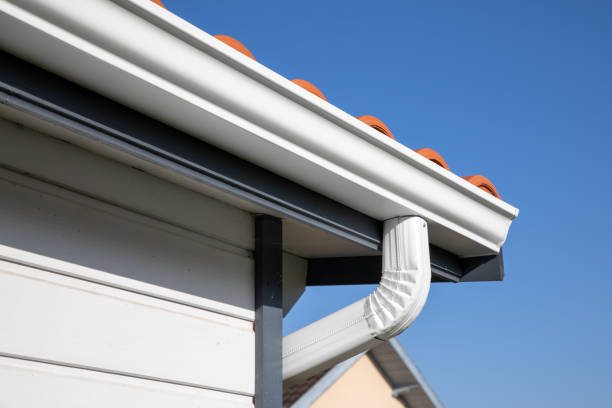

Unsung Heroes of Home Protection

Let’s be honest, gutters aren’t exactly the stuff of home improvement dreams. They won’t make it onto Pinterest boards or spark conversations at neighborhood barbecues. Your friends aren’t going to stop by specifically to compliment your seamless aluminum channeling.

Gutters
But here’s what matters: a quality gutter installation is one of the most important things you can do for a home in Central Illinois. Cut corners on this one, and you’re setting yourself up for thousands of dollars in avoidable repairs, the kind that happen slowly, out of sight, until suddenly your foundation is cracked or your basement is wet.

Why Gutters Matter More in the Midwest

Central Illinois gets around 38 inches of rain per year, spread across a lot of heavy spring and summer storms. Add in snowmelt from our winters, and you’ve got a significant water management problem on your hands a few times a year.

A modest 1,500 square foot roof sheds about 1,000 gallons of water during just one inch of rainfall. That’s literally a ton of water that needs somewhere to go, and without a working gutter system, it goes exactly where you don’t want it: straight down the side of your house and pooling against your foundation.

The damage that follows isn’t dramatic or sudden. It’s slow. Water wicks into the fascia and soffit and starts rotting the wood. It pools against the foundation and works its way into the basement. It erodes the soil around your home, which can eventually affect grading and drainage. By the time most homeowners notice a problem, the repair bill has already grown significantly.

A properly installed gutter system routes that water safely away from your home, protecting your foundation, your siding, your landscaping, and your basement, all at once.

Signs Your Gutters Need Attention

Your gutters will usually give you plenty of warning before they fail completely. Watch for these:

Water overflowing during rain, especially at corners or midspan

Sagging sections or brackets that have pulled away from the fascia

Visible separation between the gutter trough and the fascia board

Watermarks or staining on the siding below the gutters

Pooling water or eroded soil along the foundation

Water showing up in your basement after heavy rain

Rust stains or visible cracks in the gutter material

Plants growing out of the gutters

Most gutter problems start small. A loose bracket here, a clogged section there. The ones that wait become the expensive ones.

Gutter Materials: What We Install and Why

Not all gutters are the same, and the material you choose affects how long your system lasts, how it looks, and how much maintenance it needs. Here’s a straightforward breakdown of the most common options:

Aluminum Gutters

Aluminum is the most popular choice for residential gutters in Champaign, and for good reason. It’s lightweight, rust-proof, available in dozens of colors, and holds up well to our freeze-thaw cycles. Most seamless gutters you see on homes in this area are aluminum. They typically last 20 years or more with reasonable maintenance. We use .032 gauge aluminum as our standard, which is thicker than the material used by many competitors.

Steel Gutters

Galvanized and Galvalume steel gutters are heavier and stronger than aluminum, which makes them a good fit for homes with steep roofs or heavy debris loads. They can rust over time if the protective coating is compromised, so they require a bit more attention. Stainless steel is an option for those who want maximum longevity and don’t mind the premium price.

Copper Gutters

Copper is the high-end option, and it earns that reputation. It never rusts, it develops a natural patina over time, and a well-installed copper system can last 50 years or more. If you have a historic home in Champaign or Urbana where aesthetics matter as much as performance, copper is worth the investment. It’s also the most expensive option by a significant margin.

Vinyl Gutters

Vinyl is the budget option and is best suited for outbuildings, garages, or low-exposure applications. It’s cheap and easy to install, but it becomes brittle in cold temperatures, which is not ideal for Illinois winters. We typically don’t recommend vinyl for primary residences, and we’ll tell you that upfront rather than just sell you whatever’s cheapest.

Seamless vs. Sectional Gutters

Sectional gutters come in pre-cut pieces that are assembled on-site using connectors. They’re what you find at the big box stores. Every joint in a sectional system is a potential leak point, and over time, the sealant at those joints breaks down. In Illinois, where we deal with significant temperature swings, sectional systems tend to fail faster.

Seamless gutters are fabricated on-site from a continuous coil of material, cut to the exact length of each run. There are no joints except at the corners and downspout outlets. They leak less, look cleaner, and last longer. All of our residential gutter installations are seamless. It’s not a premium upsell, it’s just the right way to do it.


Gutter Sizing: Bigger Isn't Always Better, but Correct Is

Most homes in Central Illinois are well-served by standard 5-inch K-style gutters. But certain situations call for 6-inch gutters: steeply pitched roofs that shed water faster, large roof sections that channel water to a single point, or homes in low-lying areas where heavy rainfall events are more impactful.

Undersized gutters overflow constantly and never drain properly. Oversized gutters look out of proportion and can cost more than necessary. We assess your roof pitch, drainage area, and downspout layout before recommending sizes. This matters more than most homeowners realize.


Gutter Guards: Do They Actually Work?

Gutter guards are one of the most asked-about topics we get, so let’s cut through the marketing noise.

The honest answer: some gutter guards work reasonably well, and some are a waste of money. The quality varies widely.

Micro-mesh guards, particularly stainless steel micro-mesh products, are the most effective type we’ve seen. They keep out virtually all debris while allowing water through, and they hold up over time without the sagging or warping you see with cheaper plastic covers.

Surface-tension guards (reverse curve designs) work well for large debris but can struggle with small pine needles and seed pods, which are common in Champaign neighborhoods with mature tree cover.

Foam and brush inserts tend to accumulate debris inside rather than on top, which defeats the purpose.

Our recommendation: if your gutters are regularly clogged due to significant tree coverage, quality micro-mesh guards are worth it. If your property doesn’t have heavy tree cover, regular cleaning twice a year is usually more cost-effective than the installed price of a guard system.


Professional Installation Makes a Real Difference

Gutters look simple. You’re essentially attaching a channel to the edge of a roof and routing water toward a downspout. But the details of doing it right are easy to miss and expensive to correct:

Pitch

Gutters need to slope toward the downspout at roughly 1/4 inch per 10 feet of run. Too flat and water sits and breeds mosquitoes. Too steep and they look visually off and can overflow at the outlet.

Hanger Spacing

We space hidden hangers every 24 to 30 inches. Many contractors stretch that to 36 or even 48 inches to save time and material. The difference shows up during the first Illinois ice storm, when gutters loaded with ice and sitting on inadequate support pull away from the fascia.

Fascia Condition

We check the fascia before we hang anything. Mounting gutters to rotted or compromised fascia just means you'll be paying to pull them down and reinstall them in a couple of years. If the fascia needs work first, we'll tell you.

Downspout Sizing and Placement

Most homes need one downspout for every 20 to 30 linear feet of gutter. Undersizing this is a common installation shortcut that leads to persistent overflow issues. We also size downspouts for your roof's drainage area, not just the linear footage.

Sealing

Every corner, end cap, and outlet gets properly sealed. These are the most common failure points, and they're worth doing right.

Gutter Maintenance in Central Illinois: What You Should Know

Even a perfectly installed gutter system needs periodic maintenance. Here’s what we see in this part of Illinois:

The biggest culprit is fall leaf debris, particularly from oaks and maples, which tend to break down slowly and form dense clogs. Cleaning gutters twice a year, once in late November after the leaves are down and once in early spring, is the minimum for most Champaign-area homes with mature trees nearby.

Ice damming is less of an issue here than it is in northern Wisconsin or Minnesota, but we do get stretches of winter weather where water backs up at the roof edge and refreezes in the gutter trough. Keeping gutters clean and ensuring good attic ventilation is your best defense.

Downspout extensions are worth paying attention to as well. A downspout that terminates right at the foundation accomplishes almost nothing. Extensions that direct water at least four to six feet away from the house, or underground drainage that routes it further, make a real difference in keeping moisture away from your foundation and basement.


Ready for Proper Protection?

We’ve installed and repaired gutter systems on homes throughout Champaign, Urbana, Savoy, Mahomet, and the surrounding communities. Whether you need a new seamless system, repairs to an aging installation, or a straight answer on whether gutter guards make sense for your property, we’re happy to come take a look.

If you’re dealing with storm damage that affected your gutters alongside your roof or siding, we handle that as a complete exterior package, so you’re not coordinating three separate contractors.

Contact Roof Panther for a free estimate. We’ll assess your drainage situation, explain your options clearly, and give you a recommendation that actually fits your home.

Our Credentials

Licensed

In Illinois (#104.018415) and growing

Bonded

For your peace of mind

Insured

With high limits

Guaranteed

With a workmanship warranty

Contact Us! (Please provide your contact information below.)

We Look Forward To Working With You!

Roof Panther

903 N High Cross Rd. Urbana, IL 61802

By Appointment Only

Phone

(217) 530-8570

Email

roofpanther@gmail.com

Follow Us