

More Than You'd Expect, Less Complicated Than You Fear
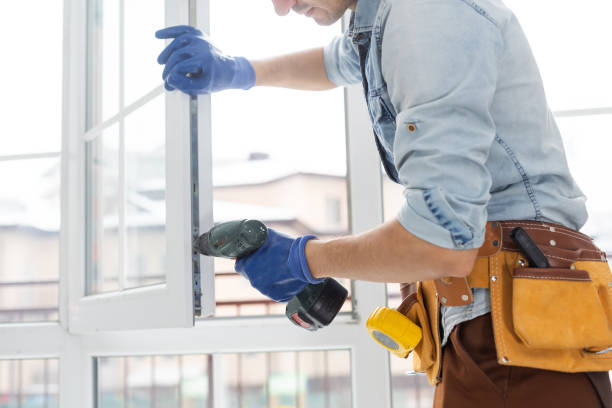
Replacing windows is one of those projects where the options are genuinely overwhelming and the marketing noise from manufacturers makes it harder, not easier, to figure out what actually matters. I’ve seen too many homeowners rush in without understanding the basics and end up with products that underperform or installations that cause more problems than they solve.
This page cuts through that. What the different window types are good for, what frame materials actually mean for your home in Central Illinois, what glass performance specifications to pay attention to, and most importantly, what separates a window installation that performs for 25 years from one that starts failing at five.
Why Windows Matter More Than Most Homeowners Realize
Windows account for 25 to 30 percent of a home’s heating and cooling energy use. That’s a larger share than most people expect, and it’s what makes window replacement one of the few home improvement projects where the ongoing savings are real and measurable rather than theoretical.
Replacing single-pane windows with ENERGY STAR-certified double-pane windows can save $101 to $583 per year depending on the number of windows and your home’s heating and cooling profile. I’ve had clients in Champaign report their heating bills dropped by 20 percent after replacing old single-pane windows. In a climate with winters as cold as ours and summers as hot, that payback is genuine.
Beyond energy costs, windows affect how comfortable your home actually feels day to day. Single-pane glass in winter has a surface temperature 20 to 30 degrees colder than the room air temperature. That radiative cold creates discomfort even when the thermostat reads 70 degrees. Quality windows eliminate that. Homeowners consistently tell me they didn’t realize how uncomfortable their old windows were until the new ones were in and they felt the difference.
The other factors: noise transmission from outside, UV fading of furniture and flooring, and security. Modern window locking systems and laminated glass options are a meaningful upgrade from the latches common on windows installed before 2000. Tempered glass in required safety locations is a code requirement, not an option.
Window Types: What Works Where
Double-Hung Windows
Double-hung windows are the most common window type in residential homes for good reason. Both sashes slide vertically, both tilt inward for cleaning from inside the house, and they work with almost any architectural style. They’re generally the most affordable operable window type and the easiest to source in a wide range of sizes.
The tradeoff is air sealing. Double-hung windows have more potential air leakage points than casement windows because the sliding sashes rely on weatherstripping rather than compression seals. Modern double-hung windows have improved significantly in this area, but casements still outperform them on air infiltration tests.
Casement Windows
Casement windows are hinged on the side and crank outward. When the window is closed, the wind pressing against the sash actually pushes it tighter into the frame seal, which is why casements consistently test as the most energy-efficient operable window type. They provide full opening for ventilation, unobstructed views with no center rail, and better air sealing than double-hungs.
The practical consideration in Central Illinois: casements project outward when open. That’s fine over a garden bed. It’s a problem directly above a walkway or close to a neighbor’s fence. We assess placement before recommending casements for specific openings.
Sliding Windows
Sliding windows move horizontally on tracks rather than vertically. They work well in openings that are wider than they are tall, in locations where an outward-projecting casement would be impractical, and where simple operation with minimal mechanical parts is a priority. They’re generally less expensive than casements of comparable size.
Air sealing performance sits between double-hung and casement. For openings where a casement isn’t practical, a quality sliding window with good weatherstripping is a reasonable choice.
Picture Windows
Picture windows are fixed, non-operable, and completely sealed. Because there are no moving parts and no operation seals that can degrade over time, they’re extremely energy-efficient and among the most durable window types available. They provide the largest possible glass area for an opening and are the right choice anywhere views and light are the priority and ventilation comes from adjacent operable windows.
Bay and Bow Windows
Bay windows project outward from the wall on three panels, typically at 30 or 45 degree angles. Bow windows use four or more panels in a curved arrangement. Both create interior space, increase natural light from multiple angles, and add architectural character to a home’s exterior. They’re more expensive than standard windows and require structural consideration since the projection needs support.
In older Champaign and Urbana homes where the original bay windows are deteriorating, replacement is often a better investment than repair because modern thermal performance in a bay configuration is dramatically better than what was installed in the 1970s and 1980s.
Specialty Shapes
Arched, circular, oval, triangular, and other non-rectangular windows are available as fixed units for architectural interest. They’re common in gable ends, over entry doors, and as accent windows above standard units. They typically cost more than rectangular windows of comparable area and have longer lead times, but they’re the right solution for specific architectural situations and worth planning for during any project that touches those openings.
Window Frame Materials
Vinyl
Vinyl is the most widely installed window frame material in residential replacement projects, and the performance has improved substantially from earlier generations. It provides excellent insulation, never requires painting, and holds up well in Central Illinois’s temperature range. Installed costs typically run $300 to $750 per window depending on size and configuration.
The honest limitations: color selection is limited, primarily white and a handful of neutral shades. Premium vinyl can expand and contract more than other materials in extreme temperatures, which can affect seal longevity on the low end of the price range. Buy mid-grade or better and the performance is solid.
Fiberglass
Fiberglass frames are the strongest performer in our climate and the material I recommend most often to homeowners who want a long-term solution and aren’t primarily budget-constrained. Fiberglass expands and contracts at nearly the same rate as glass, which means the seals between frame and glass maintain their integrity through decades of temperature cycling. Hollow frames are typically foam-filled for additional insulation. Expected lifespan runs 50 years or more with virtually no maintenance.
The tradeoff is cost. Fiberglass windows are significantly more expensive than vinyl. For a homeowner planning to stay in their home for 20 years, the math usually works. For someone who may sell in five, vinyl may be the more practical choice.
Wood
Wood windows have natural insulating properties, accept paint or stain in any color, and look like nothing else in the right setting. Original wood windows in historic Champaign and Urbana homes, particularly the craftsman and prairie-style houses that are common in older neighborhoods, are architecturally significant and worth preserving if the frames are sound.
The maintenance commitment is real. Wood windows that aren’t painted or sealed on a regular cycle will rot and fail. Modern wood windows often use finger-jointed pine rather than old-growth wood, which doesn’t perform as well as the originals in older homes. Clad-exterior wood windows, where the exterior face is aluminum or fiberglass-clad, reduce the maintenance burden significantly while preserving the wood interior appearance.
Composite
Composite windows combine wood fiber and polymer resin to approximate wood appearance with better moisture resistance and dimensional stability. Products like Andersen’s Fibrex and Marvin’s Ultrex are the most well-known. They can be painted, they don’t rot, and they hold their shape through temperature swings better than standard vinyl. They sit in the mid-to-high price range and are a reasonable choice for homeowners who want the wood aesthetic without the full wood maintenance commitment.
Aluminum
Glass Performance: What the Specifications Actually Mean
The glass package matters more than the frame material for energy performance. Here’s what the specifications mean in plain language.
Single vs. Double vs. Triple Glazing
Low-E Coatings
Low-E is a microscopic metallic coating applied to one or more glass surfaces inside the sealed unit. It reflects infrared heat while allowing visible light through. The version that matters for Central Illinois is solar gain Low-E: in a heating-dominated climate, you want to maximize solar heat gain in winter while limiting it in summer. The coating formulation matters here. Not all Low-E is the same, and windows specified for a southern climate will perform differently in Illinois. We specify the right Low-E formulation for this region.
Argon Fill
Argon gas between the panes improves insulation by about 30 percent compared to air-filled units and adds minimal cost. It’s standard in any quality window today. Krypton is a further upgrade for very thin triple-pane units but unnecessary for most residential replacement applications.
Warm-Edge Spacers
The spacer is the component that separates the two panes of glass at the perimeter of the sealed unit. Aluminum spacers conduct cold to the glass edge, creating condensation and heat loss at the perimeter. Warm-edge spacers, typically made of foam or composite materials, significantly reduce this effect. They’re the overlooked specification that affects both comfort and long-term seal integrity.
Installation: Where Good Windows Fail
The best window on the market will underperform if it’s installed incorrectly. I’ve removed windows less than three years old that were failing entirely because of installation problems, not product defects. The window was fine. The installation wasn’t.
Water management is the critical system. Every window installation needs sill flashing that directs water away from the rough opening, jamb flashing at the sides, and head flashing above. These need to integrate correctly with the home’s house wrap or water-resistive barrier. A window installed without proper flashing sequence is a slow water intrusion problem waiting to manifest.
Insulation around the frame. The gap between the window frame and the rough opening framing needs to be filled with minimal-expanding foam insulation. Over-packed fiberglass insulation can distort the frame. Under-insulated gaps are air leakage and condensation points. The foam fill is a small detail that significantly affects performance.
Leveling and shimming. A window that isn’t perfectly plumb and square won’t operate correctly and will wear its weatherstripping unevenly over time. Getting this right requires patience and calibrated technique, not speed.
Exterior finishing. The exterior trim or capping around the window completes the weather barrier. It needs to shed water, seal correctly to the window frame and siding, and be caulked with the right materials for outdoor exposure. We don’t use day laborers or subcontract to the lowest bidder on installations. The people doing the work are experienced, and that shows in the details.
Repair vs. Replacement: The Honest Answer
Not every window problem justifies replacement. Here’s a straightforward framework for making the decision.
Repair makes sense when wood frames are structurally sound but need weatherstripping or hardware, foggy glass is the only issue in an otherwise functional window (the sealed unit can often be replaced without replacing the frame), or the windows have historic architectural significance that replacement would compromise.
Replacement makes sense when frames show rot, warping, or deterioration that affects structural integrity, the windows are difficult to operate or no longer seal correctly, condensation appears between the panes indicating the sealed unit has failed, energy bills are unusually high and the windows are a contributing factor, or the windows are approaching or past 25 to 30 years old and showing multiple issues.
The ROI on replacement is real: ENERGY STAR windows save $101 to $583 per year compared to single-pane, homeowners typically recover 68 to 74 percent of replacement costs in increased home value, and there are often utility rebates and tax incentives available for qualifying energy-efficient windows. We’ll tell you honestly whether repair or replacement makes more sense for your specific situation.
Common Questions
How long does installation take?
For a typical home with 10 to 15 windows, installation takes one to two days. We typically complete five to ten windows per day depending on complexity and access. Custom or specialty windows have longer lead times for ordering, typically three to eight weeks, but the installation itself is the same.
Can windows be replaced in winter?
Should I replace all windows at once?
What about permits?
Ready to Get Started?
We replace windows throughout Champaign, Urbana, Savoy, Mahomet, Rantoul, and the surrounding communities. Projects range from a single problem window to full whole-house replacements. If you’re replacing windows as part of a larger exterior project alongside siding or a home addition, we handle all of it under one contract.
Contact Roof Panther for a free in-person assessment. We’ll measure the openings, evaluate the existing frame conditions, walk through the material and glazing options that make sense for your home, and give you a specific written estimate.
Our Credentials

Licensed
In Illinois (#104.018415) and growing

Bonded
For your peace of mind

Insured
With high limits

Guaranteed
With a workmanship warranty
Contact Us! (Please provide your contact information below.)
We Look Forward To Working With You!
Roof Panther
903 N High Cross Rd. Urbana, IL 61802
By Appointment Only
Phone
(217) 530-8570
roofpanther@gmail.com